


Every week, roughly a Dallas Cowboys stadium’s worth of Americans turn 65.
Chase Idleman is quick to reassure those of us nearing that milestone that 65 is “the new 35.” But he also thinks we’re nowhere near ready for the caregiving demands that are coming.
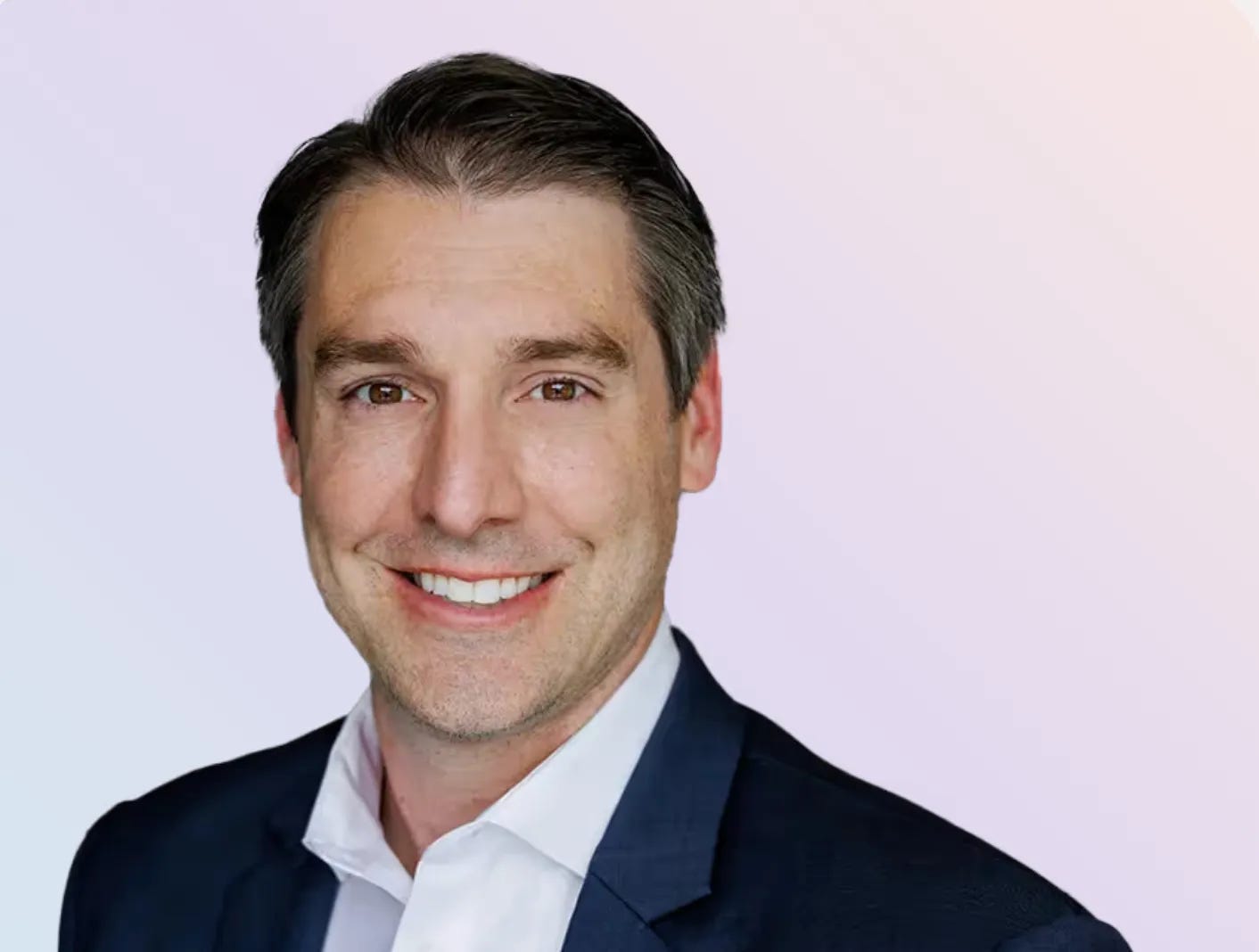
Idleman is founder and CEO of Arlow, a company that combines AI-powered tools with human advisors to help older adults and their families manage the day-to-day realities of aging. It’s part of the emerging category known as AgeTech—one Idleman sees as a greenfield.
His route to founder and CEO wasn’t exactly direct. He grew up expecting to take over his parents’ air ambulance business, spent two decades in medtech instead, then had what he cheerfully calls a “midlife crisis” and finally started a company of his own.
Chase and I talked about why startup life turned out to be 10 times harder than he expected, the founder’s 3 a.m. anxiety, how his years in the corporate world prepared him for entrepreneurship, and how Arlow is trying to help families navigate aging before a crisis hits.
Our conversation has been lightly edited for clarity.
When you went to Baylor for undergrad, the internet bubble was peaking. Did you want to get into that tech world?
Not exactly. I actually planned to get into the family business. I was born and raised in Fort Worth, Texas, and my parents were entrepreneurs—they ran a fixed-wing air ambulance company. They had a whole fleet of airplanes they used to fly patients long distances. From a young age, I always thought I was going to take that business over. At four years old, I was sweeping the hangars at Meacham Field.
So I went on and got my EMT certification, started working in the back as a second medic, and got my commercial pilot’s license. Going to Baylor, I still had that path in mind. My entrepreneurship major was with an emphasis in family business. The double major in marketing was basically because my parents weren’t strong in that area. They were great operators but always had a need for marketing and sales experience.
But funny enough, once I was in school, my parents said, “You know, second generations always screw up the business.” They really encouraged me to leave the family nest. So I went to North Texas for grad school.
By the time you graduated, the job market was a little different than when you went in. What was your first job?
When I finished grad school circa 2006, everyone was either going into oil and gas or this new tech sector. I had a friend who worked for J&J, and she’s the one who introduced me to medtech, medical devices, all that.
Here in Fort Worth, there’s a very prominent company called Alcon, the world’s largest ophthalmology-based company. Alcon said, “Hey, we’ll give you a job, but you got to move to Atlanta.” And I was like, “Please don’t make me.” [laughs] But ultimately, I said yes, moved to Atlanta, and then as quickly as possible jumped back to Texas and moved to Austin shortly thereafter.
You spent many years after that in medtech, kind of in the same realm as your parents, actually. Now you’ve founded your own company, Arlow. I assume you always had this idea in your head that you wanted to do something entrepreneurial. Is that right?
So the short story: I stayed in medtech, went into the operating room with a company called Intuitive Surgical, and had a hand in a startup that created a robot called ROSA for neurosurgery. We got bought by Zimmer Biomet, and I moved into leadership at ZB.
I’m 44 years of age, and about a year and a half ago I had a midlife crisis. My parents sold their business after 41 years, so there was nothing to go back to. And I was like, “Man, I never got to live the dream I had as a five-year-old boy of taking over the family business.” I’d always wanted to do that.
I met an individual about a year and a half ago whose parents were in the crisis mode of aging. He was looking at the tools and solutions that could help support him, his siblings, and his aging loved ones. He was like, “They all suck. They’re not good. We can do better.” So we went out, high-fived, and started Arlow on March 26 of last year and got running.
Moving over to the startup side of things is hard. I told a friend this the other day: If you think you know it’s going to be hard, expect it to be 10 times harder than that.
You had seen your parents’ business, so you knew something about running a business. But what surprised you most about moving from the corporate world to a startup environment?
I think people sometimes paint the corporate world in a really negative light compared to owning your own business. But the corporate world teaches you a lot of good things. It teaches you discipline. It teaches you the fundamentals of business. You get to see how things work at scale.
Moving over to the startup side of things is hard. I told a friend this the other day: If you think you know it’s going to be hard, expect it to be 10 times harder than that.
But I rely on my corporate background and the diversity and development I got there every single day. I don’t think I would be as successful as I am now if it weren’t for the blueprints and ingredients that 20 years of experience provided me before this opportunity.
Was there any experience you wish you’d had in the corporate world that would have helped?
Well, there’s part of me that is like, “Why didn’t I do this when I was 27?” I think about that all the time because time is my worst enemy right now. But again, I wouldn’t have the network and skill set at that age.
One of the biggest realizations for me comes from being on the other side of the table now, especially when it comes to mergers and acquisitions, business development, and so on. In that world, you’re sitting on one side of the table. Then you start a company and you’re raising capital, and suddenly you’re on the other side.
Now you’ve got to learn how to build a pitch deck. You’ve got to learn how to communicate with institutional venture capital and family offices. That’s been a big education.
There’s also a whole different language in the startup world. I didn’t know a TAM from a SAM. I remember meeting with our board of directors, and they asked me, “Tell me what you know about QSBS and 83(b) elections and 409A valuations.” And I’m thinking, I have no idea what you’re talking about.
It’s a whole different world. You have to surround yourself with people who will help you, or you’ll be flying blind on some of this stuff.
People in the corporate world often talk about feeling fenced in. They want to run and knock down all these fences blocking them in. But when they come work at a startup, there is no fence. You have to figure out which way to run in the first place.
Exactly. One of my closest friends, who is still a VP at my last job, asked me, “What is the one skill set that you absolutely need for this new role?” I said, “Initiative.” That’s something I feel like I have always had.
You have to wake up and figure out which direction to go. You not only have to have the initiative to get out of bed, but you have to know which way to run. When you have a million different directions you could go, that’s the challenge. You can do anything you want.
Do you notice a different feeling being responsible for investors’ money in a way you weren’t before?
I absolutely feel that fiscal responsibility to the investors, and I’m beyond grateful for them. But I also feel that responsibility for the team. They have all taken a chance by leaving their previous jobs and joining what we are building at Arlow. They have made a big sacrifice to be here on this ship with us. So there is a different level of anxiety you have to navigate day to day.
That’s often the biggest difference CEOs talk about: the anxiety.
I don’t say this the way some people talk about not sleeping as a badge of honor. But I get up at 3:00 a.m. almost every day. I am thinking about how we accomplish our mission around the clock.
The other factor people talk about is a certain loneliness because there are not a lot of people you can talk to about stuff.
I have a co-founder and she’s phenomenal, and I have a great team. I also have a circle of friends that I commiserate with, but it’s a very close circle. It’s not a lot of people. And the reality is they can’t always understand what I’m going through. Unless you’ve lived it or been there, it’s hard to relate sometimes.
Let’s talk a little bit about Arlow, because I think it’s addressing something almost everybody has some experience with. How are you addressing aging and eldercare?
Let me start with some data that helps frame this up. Every day in the U.S., about 11,000 people turn 65. That’s roughly a Dallas Cowboys stadium full of people every week. Senior housing is already tight. Assisted-living communities in major U.S. markets are nearly 88% occupied, and very little new supply is being built. And three out of four adults 50 and older say they want to remain in their current homes as they age.
We as a society are not ready for that reality.
And the problems are complex because aging doesn’t create just one problem. An older adult may be concerned about loneliness. A caregiver may be thinking, I want to make sure Mom has groceries in the cupboard. Or, My mom has dementia. Where do I need to take her? What does reimbursement look like? How do I ensure the house is safe for her? Arlow is designed to help people navigate those different needs as they arise, rather than having to figure each one out on their own.
The other important point is that turning 65 doesn’t suddenly mean you need care. If you look at the five stages of aging, someone turning 65 just means they’re 65. It doesn’t mean they’re getting old. It’s the new 35. The needs develop over time, and our goal is to start helping people and their caregivers well before they reach a crisis.
Thank you. I’m getting too close to 65, so I was getting concerned.
[Laughs.] It’s the new 35.
The first stage where people begin to need help is what we call slightly interdependent. That’s when hearing may start to go, mobility may start to go, and you need a little more assistance. Then you move into full dependency, where you may need around-the-clock help. After that comes crisis mode and end of life.
Eighty-nine percent of aging happens in the independence, slightly interdependent, and full dependency stages. So our objective is: How can we help people who are getting older, and their caregivers, when the aging process first starts?
We offer a human element through multidisciplinary teams, but our anchor point is our CSAs, or certified senior advisors. They’re generalists across the entire spectrum of aging. If you call and say, “Hey, my mom has dementia. What does reimbursement look like?” they can help you navigate the situation and get an answer.
But our bread and butter is our tech stack. We’ve created a conversational AI that allows for self-management. So instead of having to call someone, you can ask the AI a question and it gives you what we call golden responses, which are trained responses.
Within the app, we also have things like a smart locker, where you can put a will, an advance care directive, an insurance card, and it automatically organizes everything. We have a medication management tool where you can take a picture of a supplement, an over-the-counter medication, or a prescription, and it looks at drug interactions. We have an integration with Cost Plus Drugs, Mark Cuban’s company, so you can see low-cost pricing.
It’s really a suite of offerings designed to provide support and guidance based on whatever situation that caregiver is facing.
The last piece is who we sell to. We sell predominantly to employers whose workforces include people in the sandwich generation. You’ve got someone who’s 45, they’re caring for their kids at home, and at the same time their parents are aging and need help.
So our fight is against absenteeism, decreased presenteeism, and the impact of taking FMLA leave as a result of caring for older adults. And right now this is insanely novel. Only 7% of employers offer any form of assistance for employees helping older adults at home.
We’ve been talking about the aging boomer generation forever, but I haven’t seen a lot of other efforts in this space. Is it kind of greenfield at this point?
There are a handful of companies. But by 2030, one in five Americans is projected to be 65 or older. That’s an enormous population, and yet there’s still very little penetration in this category. So it is a massive greenfield opportunity.
We sell into the enterprise space through employers, but we’re also bullish about a consumer model, and right now our consumer offering is no cost. It’s free. We’re trying to get the word out: Go download it and get experience with it.
We are evolving and scaling fast. Ultimately, the community is going to help inform our roadmap, but we have a really exciting next six to 12 months of things we’re building. I also think there needs to be much more attention on this category. We call it AgeTech, and it’s an emerging field. I come from medtech. Medtech has 6,500 different companies in the U.S. There are probably fewer than 300 in the AgeTech space.
The question I ask our team every single day is: If we’re using AI in our product, are we doing it just because we can, or are we using it to actually make someone’s life easier?
Obviously, you’re creating a product that involves AI. How does AI affect your day-to-day work as a CEO and how your team operates?
I think about AI in three parts: from a team perspective, from a tech stack perspective, and in terms of what it can do for our end users.
From a team perspective, we have to understand people’s different backgrounds and how they’re using AI day to day in their roles. From a tech stack perspective, it’s hard to keep up with, quite frankly. Are we using the right tools at the right time? Are we paying the right amount? Are these tools allowing us to go faster without getting bogged down?
And then the question I ask our team every single day is: If we’re using AI in our product, are we doing it just because we can, or are we using it to actually make someone’s life easier—to help them be more efficient, more organized, and get more accurate information?
That’s the real question: How do we make AI not just a feature, but a benefit in what we build?